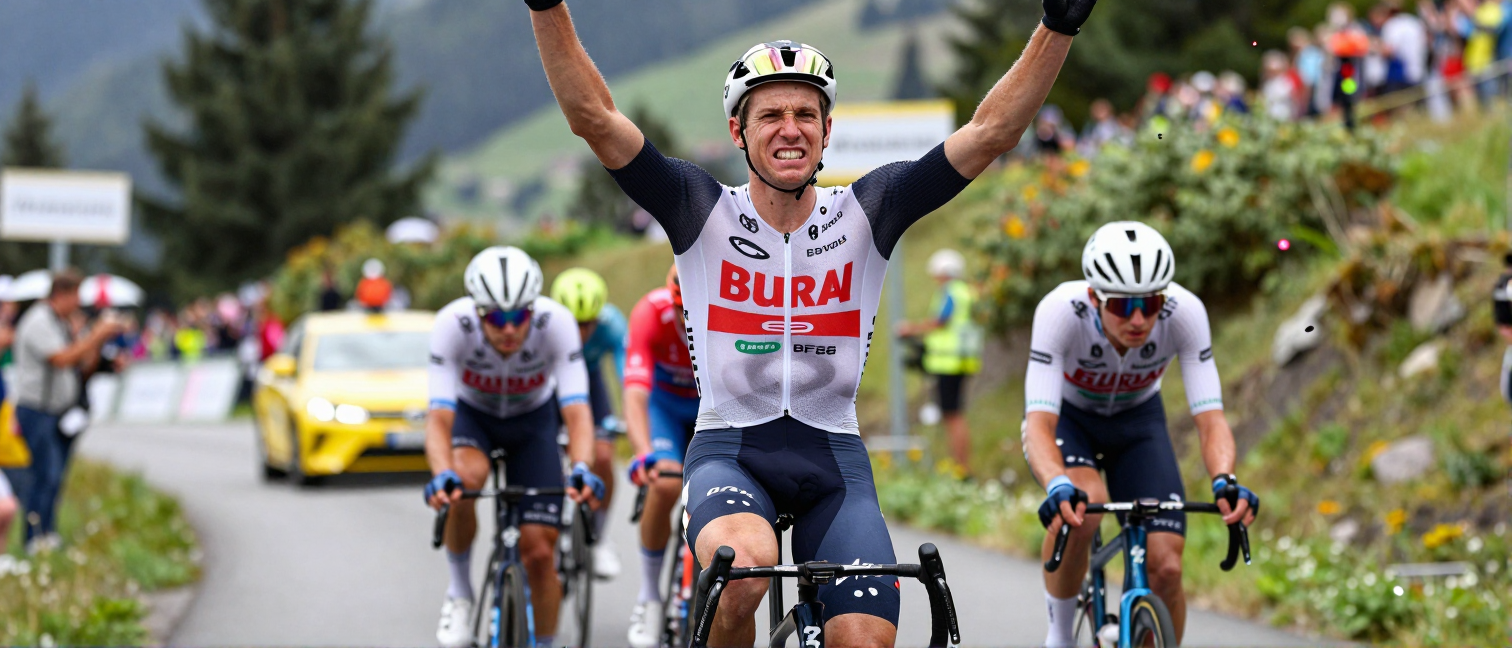
Tadej Pogacar dictated the narrative on Stage 9 of the Tour de France, using his overall lead to shape the breakaway group and leave rivals scrambling in the 35°C heat. The Slovenian’s authority over the peloton—finishing just six seconds behind stage winner Mathieu Van der Poel—highlighted his growing grip on the race ahead of the rest day.
Tadej Pogacar Dominates Stage 9: How He Controlled the Tour’s Breakaways
Sources & references
Explore Tadej Pogacar
More on Tadej Pogacar
Tadej Pogacar Demands Tour de France Calendar Overhaul Amid Heatwave
Tadej Pogacar calls for radical changes to cycling's calendar after enduring extreme heat during the 2026 Tour de France
Tadej Pogacar Teases New Tour de France Attack After Rest Day
Tadej Pogacar hints at a fresh stage attack on 9 July 2026, posing with Mathieu van der Poel after the Tour de France rest day
Tadej Pogacar Weighs In: 2026 Tour Bike Packs Unexpected Pounds
Tadej Pogacar's 2026 Tour de France bike weighs more than expected, revealing design trade‑offs that could affect his performance
Tadej Pogacar Keeps Yellow Jersey as Merlier Wins Stage 7
Tadej Pogacar retained the yellow jersey after stage 7 of the 2025 Tour de France, as Tim Merlier sprinted to victory on 11 July.
Tadej Pogacar crushes rivals on Tourmalet to seize Tour de France lead
On 9 July 2026, Tadej Pogacar soloed up the Col du Tourmalet, winning stage 6 and expanding his overall advantage to nearly three
Tadej Pogacar Seeks Record-Equalling Fifth Tour Title
Tadej Pogacar aims for a record-equalling fifth Tour title as Jonas Vingegaard and Rui Costa's teammate, Diego Seixas, challenge